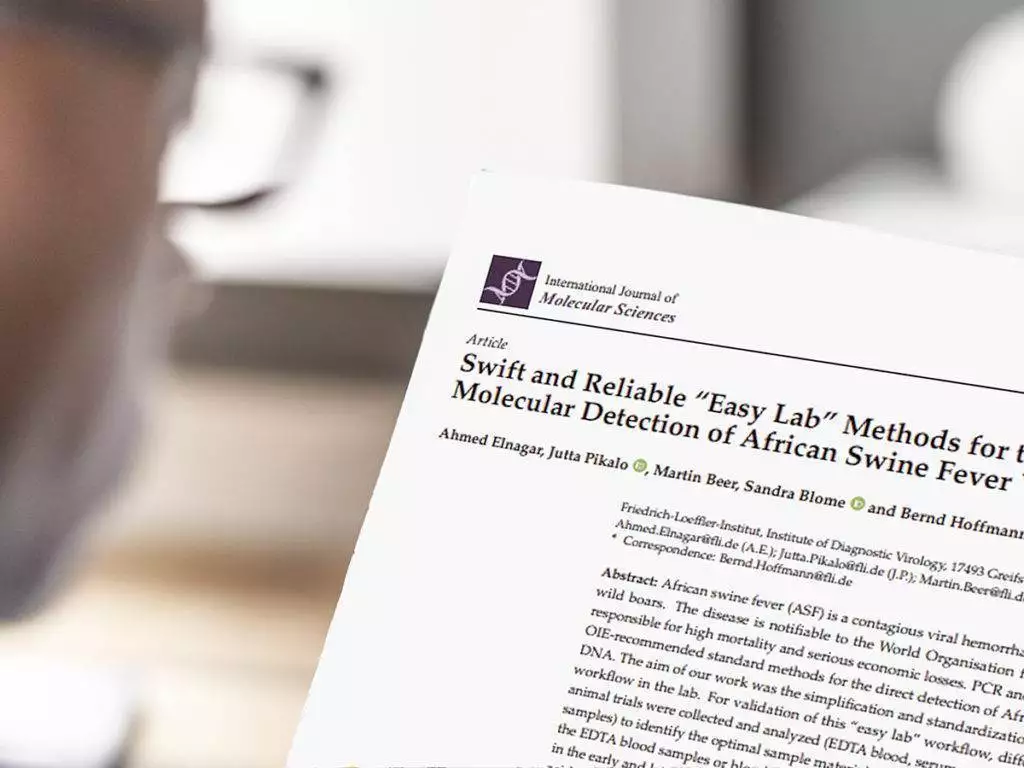
African swine fever (ASF) is a notifiable, contagious viral hemorrhagic disease of swine, responsible for high mortality and serious economic losses. In this paper, researchers from the Friedrich-Loeffler-Institut (FLI) aimed to simplify and standardize the molecular diagnostic workflow in the lab using prefilled, ready-to-use IndiMag Pathogen Cartridges for nucleic acid extraction prior to (real-time) PCR.
The study concluded that using prefilled cartridges for DNA extraction does not reduce diagnostic sensitivity. Indeed, minimization of manual handling and increased hands-off time delivered by prefilled IndiMag Pathogen Cartridges for extraction and qPCR can reduce the risk of false-negative and -positive results, especially in high-throughput scenarios.
The outbreak of African Swine Fever (ASF) in the Dominican Republic now covers the majority of provinces, as confirmed by the World Organisation for Animal Health (OIE). Identification of this notifiable disease generally results in the suspension of exports of pigs and pig products, causing huge losses to a country’s swine industry. This outbreak – the first in 40 years in the Americas – has already seen the culling of over 50,000 pigs.
Concerned about potential spread to the US territory of Puerto Rico, some ~200 miles away, the Animal and Plant Health Inspection Service (APHIS), part of the US Department of Agriculture (USDA) have established a protection zone and are conducting surveillance to quickly detect introductions of disease. APHIS is also actively supporting the Dominican Republic with detection, surveillance, quarantine, depopulation, and disposal.
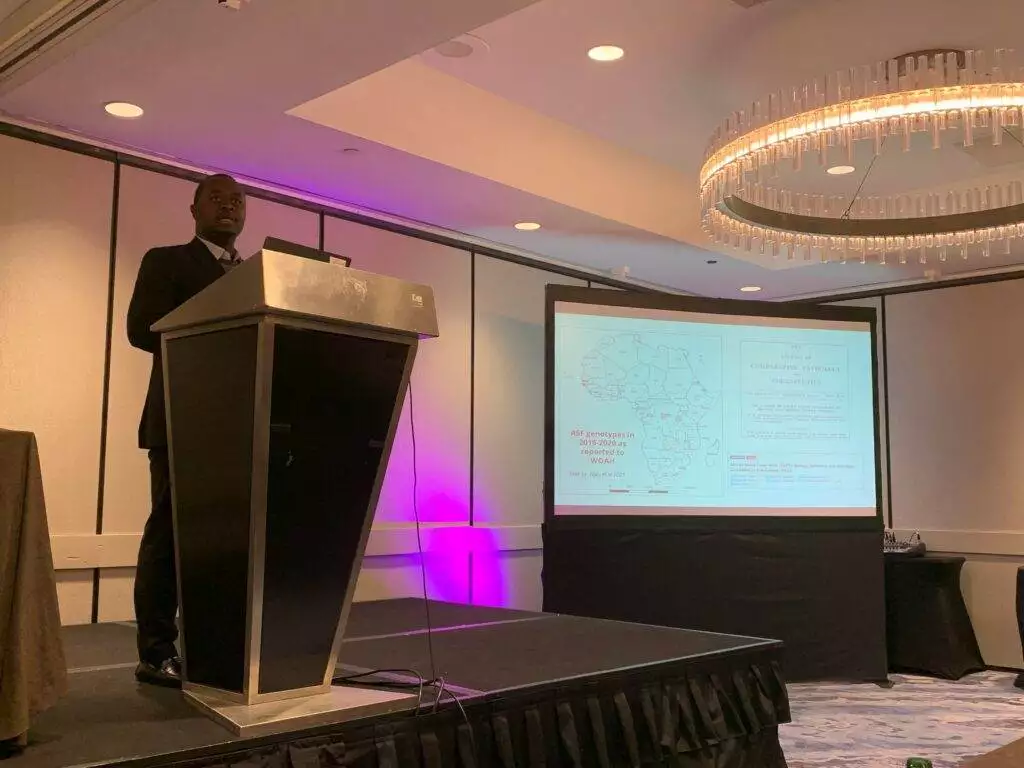
Interested in learning more about ASF strategy and readiness from key opinion leaders? Take a look at our latest webinar where you meet our two experts – Professor Grzegorz Woźniakowski (Nicolaus Copernicus University) and Ahmed Elnagar (Friedrich-Loeffler-Institut; FLI) and get their insights into ASF outbreak strategy and readiness, together with the latest in innovative diagnostics.
African swine fever (ASF) is a notifiable, contagious viral hemorrhagic disease of swine, responsible for high mortality and serious economic losses. In the paper Swift and Reliable “Easy Lab” methods for the sensitive molecular detection of African swine fever, researchers from the Friedrich-Loeffler-Institut (FLI) aimed to simplify and standardize the molecular diagnostic workflow in the lab using prefilled, ready-to-use IndiMag Pathogen Cartridges for nucleic acid extraction prior to (real-time) PCR.
The study concluded that:
EDTA blood and bloody materials are the sample matrices of choice for sensitive ASFV genome detection, independent of the course and phase of the disease.
If optimal specimens are used for the molecular detection of ASFV, several extraction, and qPCR methods are “fit for purpose”. The selection of the ideal system for a specific lab depends on various factors (samples per day, trained personnel, technical resources, etc.).
Based on the minimization of manual handling and working time, we showed that simplification and standardization of DNA extraction and qPCR methods do not result in reduced diagnostic sensitivity and actually reduces the risk of false-negative results, especially in high throughput scenarios.
At INDICAL, we share scientific insights, because improved exchange of knowledge and increased awareness are crucial in implementing efficient and coordinated ASF control strategies.
As of August 2021, African Swine Fever (ASF) was present in more than 50 countries, causing huge economic losses to the swine industry. In 2013, the virus was first observed in Baltic countries and Poland and not only in domestic pigs, but also in the wild boar population.
In Poland, outbreaks have increased and spread from east to west since 2014, with the main drivers being non-compliance with biosecurity rules and continuous infection in wild boar.
Successful methods to combat ASF
Electric fences
So-called “white zones” – where the population of wild boar should be zero
Chemical repellents
Hunting (licensed)
Increased awareness through campaigns to farmers, vets, etc.
Controlling ASFV in Europe
ASF will be present in Poland – and throughout Europe – for many more years, so measures are required to reduce economic loss. A comprehensive EU-wide strategy includes regionalization and compartmentalization of outbreaks, enabling best-possible disease control, while minimizing any negative impact of ASF on pig production and export. Early diagnosis and surveillance are the key factors against ASF spread.